
Introduction
If you’re paying a waste hauler to pick up liquid waste from your facility on a regular schedule, you already know the math: the more volume you generate, the more you pay. Fuel surcharges, manifest fees, disposal rates — it adds up quickly, and the costs tend to rise every year regardless of what your waste stream actually looks like.
The good news is that liquid volume is something you can control. For many facilities, an industrial evaporator can cut hauling costs by 90, 95, or even 99 percent — not by changing what’s in your waste, but by removing most of the water that’s making it so expensive to move.
Why Hauling Costs Are So High (And So Predictable)
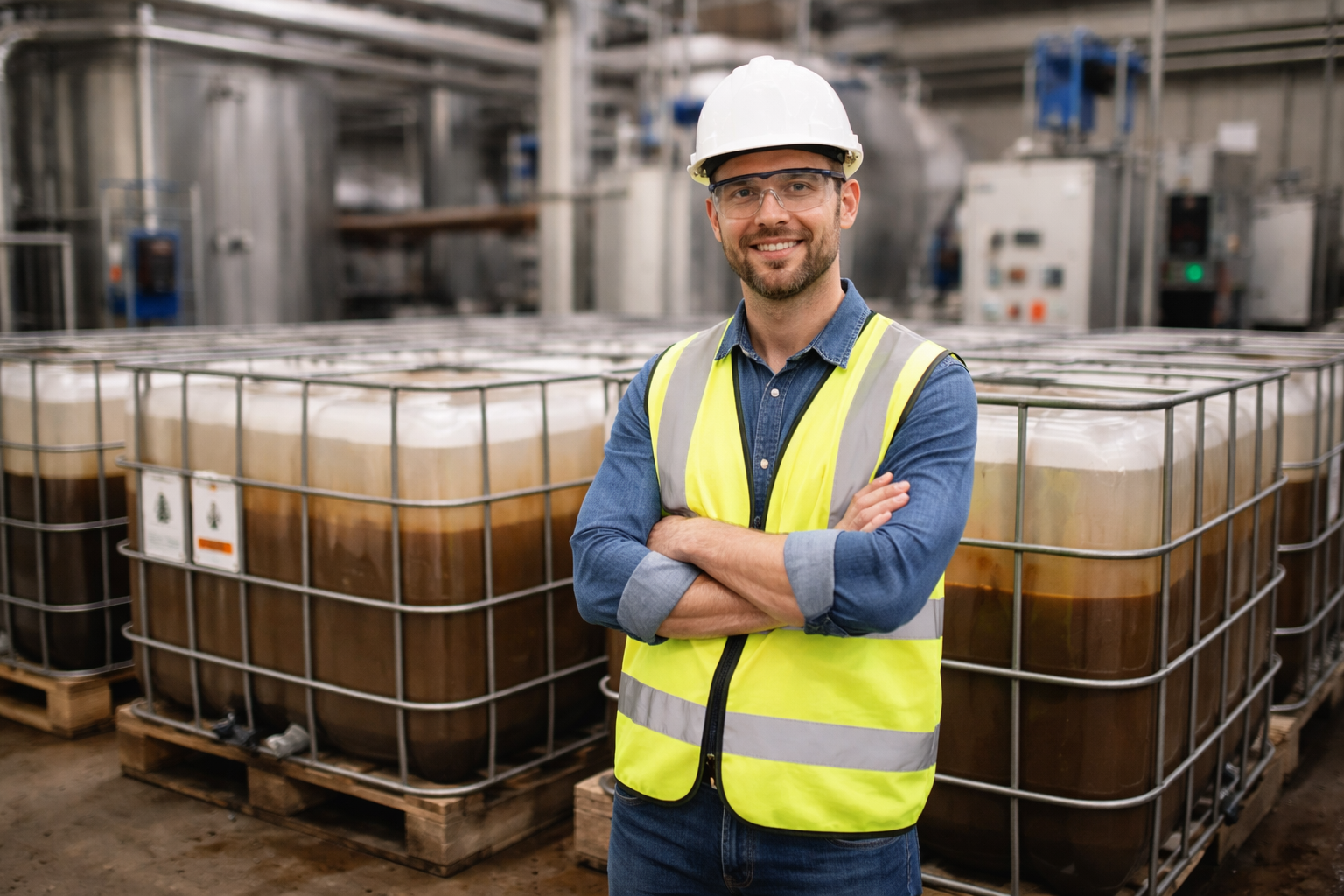
Waste hauling is priced primarily on volume. A 55-gallon drum of contaminated rinse water costs roughly the same to haul as a 55-gallon drum of concentrated metal sludge — but those two drums represent very different amounts of actual contaminant. Most industrial wastewater is 90 to 99 percent water. You’re effectively paying to truck water to a disposal facility, and you’re paying disposal facility rates for the privilege.
That’s where evaporation changes the economics.
An industrial wastewater evaporator removes water from a liquid waste stream through heat, reducing the original volume by 80–99% and leaving behind a small, concentrated residue that is far cheaper to store, transport, and dispose of.
Instead of scheduling three pickups a month, many facilities find they can consolidate to one — or stop hauling liquid waste altogether.
The Math: What Volume Reduction Actually Means for Your Budget
Consider a facility generating 1000 gallons per week of contaminated rinse water. At a hauling rate of $0.50 per gallon (a reasonable ballpark, though rates vary significantly by region, waste type, and hauler), that’s $500 per week, or roughly $26,000 per year — before fuel surcharges, manifest fees, or disposal upcharges for specific contaminants.
Now apply a 95% volume reduction with an evaporator. That same waste stream becomes 50 gallons per week of concentrated residue. Your hauling cost drops to around $1,300 per year, a savings of more than $24,700 annually. For facilities generating higher volumes or managing more expensive waste streams — plating rinse water, pharmaceutical process waste, landfill leachate — the numbers scale accordingly.
Capital costs for industrial evaporators vary depending on system size and type, but payback periods of one to three years are common when hauling is the primary alternative. Rental options are also available if you want to evaluate performance before committing to a purchase.
Which Waste Streams Benefit Most
Not every waste stream is equally well-suited for evaporation, but several of the most common hauling scenarios are excellent candidates.
Spent Coolant and Cutting Fluids
Metalworking facilities often generate large volumes of spent coolant that exceeds sewer discharge limits due to oil content, heavy metals, or biocide concentration. These streams are predominantly water and evaporate efficiently. The concentrated residue is a much smaller volume to manage.
Plating and Metal Finishing Rinse Water
Rinse waters from electroplating lines contain regulated metals — chrome, nickel, zinc, copper — that prevent discharge. Evaporation reduces this high-volume, low-concentration waste to a manageable sludge. Facilities that previously paid for weekly pickups often shift to monthly or quarterly disposal after installing an evaporator.
Compressor Condensate
Air compressors generate condensate that typically contains trace oils and sometimes metals from the compression system. While the volumes are smaller than other streams, facilities are often surprised by how quickly condensate accumulates and how expensive it becomes to haul.
Vehicle and Equipment Wash Water
Wash water from truck bays, equipment yards, and fleet wash operations frequently contains petroleum products and suspended solids that prevent direct discharge. Volume tends to be moderate but consistent — a predictable, recurring hauling cost that an evaporator can eliminate.
Reverse Osmosis Reject
Facilities using reverse osmosis (RO) for water purification or process water treatment generate a concentrated reject stream that is often difficult to discharge. Evaporation can significantly reduce the volume of the reject stream.
If your waste stream is substantially water (70-99%), it is likely to be a good application for ENCON wastewater evaporators.
Beyond Cost Savings: Eliminating Discharge Risk
There’s another reason facilities look hard at hauling alternatives: the risk that comes with relying on third-party disposal. When a hauler picks up your waste, you remain responsible for it under RCRA and most state environmental regulations. If that hauler improperly disposes of your material downstream, your facility can face liability. Reducing the volume of material that leaves your site also reduces your exposure.
For some facilities, the goal isn’t just cost reduction — it’s Zero Liquid Discharge (ZLD), where no liquid waste leaves the site at all. Evaporation, particularly when paired with a slurry dryer, is one of the most reliable paths to ZLD available for complex industrial waste streams.
Choosing the Right Evaporator for Volume Reduction
The right system depends on how much waste you’re generating, what’s in it, and how you want to handle the residue.
Thermal Evaporators are the most common choice for facilities focused on volume reduction. They are robust, handle a wide range of waste streams, and are available in capacities suited to everything from small batch operations to continuous high-volume processing.
Mechanical Vapor Recompression (MVR) evaporators deliver proven performance and ultra-low operating costs - as low as $0.01 per gallon - making it a smart solution for facilities with higher wastewater volume.
Vacuum Heat Pump (VHP) are electric evaporators that feature a heat pump circuit which makes them five times more energy efficient than conventional electric resistance evaporators.
Drum Evaporators are worth considering for facilities with lower volumes — a few hundred gallons per week — that simply want to eliminate a recurring hauling expense without a major capital investment.
If you’re not sure which system fits your situation, ENCON’s applications engineering team can review your waste stream, estimate volume reduction, and help you build a realistic payback analysis. Contact us to get started.
Conclusion
Wastewater hauling costs are one of the more controllable line items in a facility’s environmental budget. An evaporator doesn’t change what’s in your waste stream — it just removes the water that makes it expensive to move. For most aqueous industrial waste streams, that single change is enough to dramatically reduce disposal costs, simplify logistics, and reduce the compliance risk that comes with off-site waste management.
.png?width=352&name=Worker%20Sampling%20Blowdown%20(1).png)