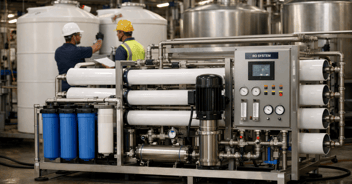
If you run a machine shop or any metalworking operation, spent coolant is a fact of life. Cutting fluids, grinding fluids, and water-soluble coolants all degrade over time — contaminated with tramp oil, metal fines, bacteria, and accumulated metals — until they're no longer fit for use and need to go somewhere.
The problem is that somewhere is not simple. Spent coolant is classified as a hazardous waste in most circumstances. It cannot go down the floor drain, into a dumpster, or onto the ground. Your options are more limited than you might like, and they each come with tradeoffs.
This post breaks down the three main paths most facilities take with spent coolant — hauling, recycling, and on-site treatment — and what to consider when choosing between them.
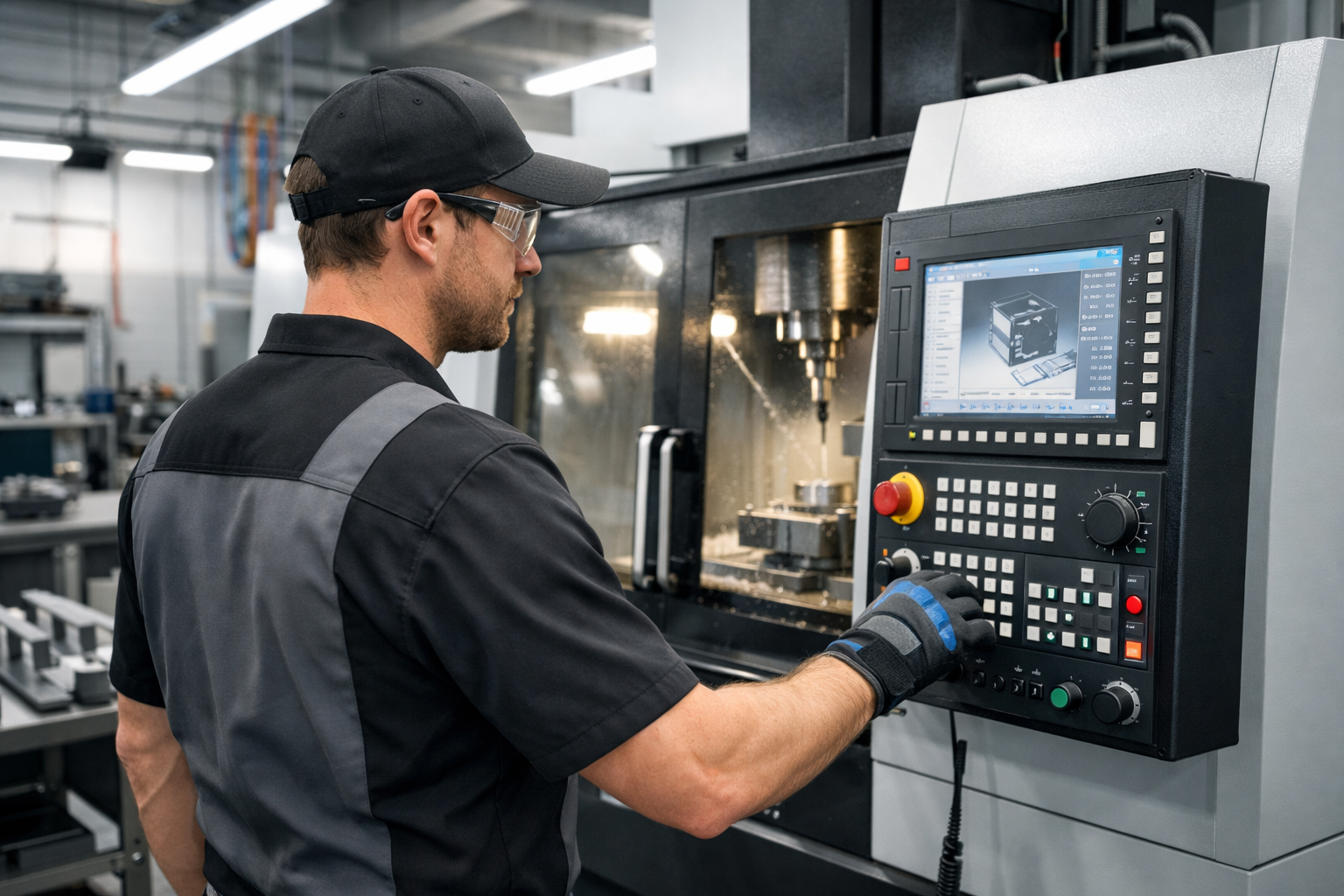
Why Spent Coolant Is a Problem Worth Taking Seriously
Before getting into the options, it's worth understanding why spent coolant gets complicated.
Fresh metalworking fluid is typically a mixture of water, lubricants, rust inhibitors, biocides, and other additives. As it circulates through machining operations, it picks up metal particles, tramp oil from machine lubricants, and bacteria that thrive in the warm, nutrient-rich environment. Over time, the biocides are depleted, the bacteria population explodes, and the fluid becomes a foul-smelling, ineffective sludge that machinist slang charitably calls "rancid coolant."
At that point it is a regulated waste. Spent coolant typically contains elevated levels of heavy metals (from the machined parts themselves), petroleum hydrocarbons, and chemical additives that disqualify it from sewer discharge in most jurisdictions. Before disposal, you need to understand your local pretreatment limits — and in most cases, spent coolant exceeds them.
Fines for improper disposal are real, and regulators have become more sophisticated about tracking discharge violations. Getting this right is not just an environmental responsibility; it's basic risk management.
Option 1: Waste Hauling
The most common approach for smaller shops is simply to call a licensed waste hauler. A truck comes, pumps out the coolant sump, and takes it away for treatment or disposal elsewhere.
The upside is simplicity. You don't need equipment, you don't need expertise, and you don't need to think about it beyond scheduling the pickup.
The downside is cost — and the trend is not in your favor. Hauling rates for hazardous liquid waste have been rising steadily, driven by tightening disposal regulations, fuel costs, and increasing scrutiny on the facilities that receive the waste. For a high-volume shop generating hundreds or thousands of gallons of spent coolant per month, hauling costs can reach tens of thousands of dollars annually.
There's also liability to consider. When you hand your waste to a hauler, you are not fully absolved of responsibility for what happens to it. Under RCRA (the Resource Conservation and Recovery Act), generators retain liability for their waste even after transfer. If the hauler improperly disposes of it, you can still be named in enforcement actions. This is not theoretical — it has happened.
Hauling makes the most sense for shops with low coolant volumes and infrequent disposal needs where the economics don't justify capital equipment investment.
Option 2: Coolant Recycling and Reconditioning
A second option is to extend coolant life through on-site recycling — filtering out tramp oil and metal fines, controlling bacteria, and restoring the fluid to usable condition rather than disposing of it.
Coolant recycling systems range from simple tramp oil skimmers to more sophisticated centrifuges and ultrafiltration units. The goal is to reduce the frequency of full coolant changeouts, which directly reduces your disposal volume.
The upside is that good coolant management can dramatically reduce your waste volume — and fresh coolant is not cheap, so extending its life has a real cost benefit on the supply side as well.
The downside is that recycling is maintenance, not elimination. Even with excellent coolant management, sumps eventually need to be changed. The fluid picks up contaminants that filtration can't remove, and at some point it has to go. You've reduced the volume and frequency, but you haven't solved the disposal problem.
Recycling and reconditioning work best as a complement to another disposal strategy, not as a standalone solution.
Option 3: On-Site Evaporation
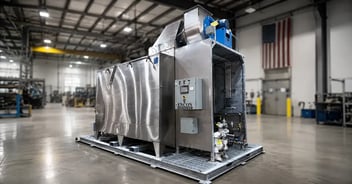
The third option — and the one that changes the economics most fundamentally — is to evaporate the spent coolant on-site.
A wastewater evaporator heats the spent coolant until the water fraction boils off, leaving behind a small volume of concentrated residue — oils, metals, solids — that is a fraction of the original liquid volume. Depending on the coolant and the system, volume reductions of 90% or more are typical. In many cases the concentrated residue qualifies for disposal as a solid waste rather than a liquid hazardous waste, which is significantly less expensive to handle.
The economics can be compelling. A shop paying $0.50 to $1.00 per gallon for coolant hauling — which is not unusual — and generating 250 gallons per week is spending $6,000 to $12,000 per year just on disposal. An evaporator sized for that volume can often pay for itself in less than two years through hauling cost elimination alone, and the math improves as volumes grow.
The operational fit matters too. Evaporators designed for spent coolant are largely self-operating — load the holding tank, set the evaporator to run, come back when the cycle is done. For shops without dedicated environmental staff, that simplicity is important.
What to watch for: Not all coolants evaporate equally cleanly. High concentrations of certain additives or contaminants can affect evaporator performance, and some waste streams benefit from pre-treatment like tramp oil removal before evaporation. A pilot test or waste stream evaluation before committing to equipment is a smart step.
Evaporation makes the most sense for shops with consistent coolant volumes, high hauling costs, or a desire to reduce their regulatory exposure by eliminating liquid waste discharge.
How to Choose
There's no universal right answer, but here's a simple framework:
If your coolant volume is low and infrequent, hauling is probably the path of least resistance. The capital cost of on-site treatment won't pencil out.
If you're generating coolant waste regularly and your hauling bills are a recurring line item worth noticing, evaluate evaporation seriously. Run the numbers against your actual hauling costs. The payback period is often shorter than people expect.
Regardless of which disposal method you use, coolant recycling and reconditioning is almost always worth doing — if only because reducing the volume you need to dispose of makes every other option cheaper.
Conclusion
Spent coolant disposal is one of those operational costs that tends to get treated as a fixed expense until someone actually looks at it. For many metalworking facilities, it doesn't have to be. On-site evaporation, in particular, has helped shops of all sizes reduce or eliminate their coolant hauling costs while simplifying their regulatory posture.
If you're not sure what approach makes sense for your operation, ENCON's team can help you evaluate your waste stream and determine whether evaporation is a fit. You can also explore our spent coolant treatment page for more detail on how the technology handles metalworking fluids specifically.